The Whale Shark and the Classroom: Understanding "Won't" vs. "Can't"
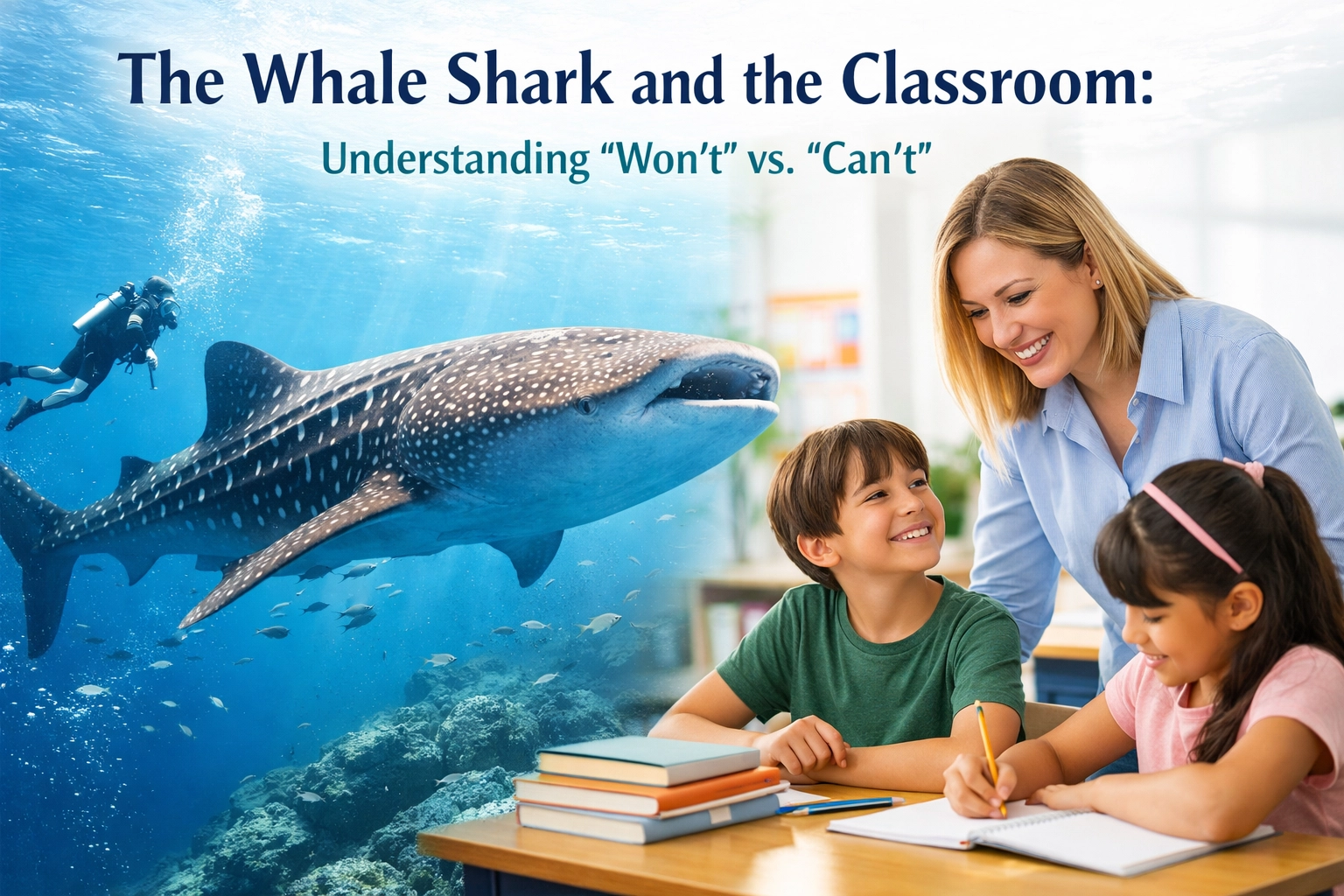
In the world of education and child development, we often encounter students who appear unmotivated, defiant, or quick to give up. When a bright child stops trying, the natural instinct for many adults is to view it as a behavioral choice: a "won't." We see a child who is "lazy," "stubborn," or "unwilling to put in the effort." However, through a clinical lens, we often find that what looks like a lack of will is actually a lack of capacity. It is not a "won't"; it is a "can't." This distinction is the cornerstone of how we approach children at PEC Group, and understanding it can transform the relationship between a struggling student and their environment.
To truly grasp this concept, I want to share a personal experience that shifted my own perspective on frustration and shutdown. It didn’t happen in a classroom or a clinic; it happened in the middle of the ocean.
Recently, I traveled to La Paz to fulfill a bucket-list dream: swimming with whale sharks. For those who know me, I am a strong swimmer, I love the ocean, and I felt confident heading into this adventure. I was highly motivated to succeed. I didn't just want to see the sharks; I wanted to be in the water with them, experiencing the majesty of these gentle giants. As our boat approached the designated area, the guides gave us our instructions: "Put your gear on. Be ready. When I say jump, you must jump immediately to land close to the shark, or you’ll never catch up."
The guide shouted, "Jump!" and I leaped into the water, swimming with everything I had. I was prepared for the physical exertion, but almost immediately, things went wrong. My goggles flooded with water. My snorkel was defective. I began swallowing salt water while trying to maintain a sprint. The water was murky, the waves were choppy, and I realized I had landed too far from the shark to ever bridge the gap.
Despite my intense desire to be there, I was physically exhausted and overwhelmed. I stopped swimming. I gave up. I sat in the water, bobbing in the waves, feeling a deep sense of disappointment and failure. I wasn't "unmotivated": I was out of shape for that specific demand, my equipment failed me, and the environment was more than I could navigate in that moment.
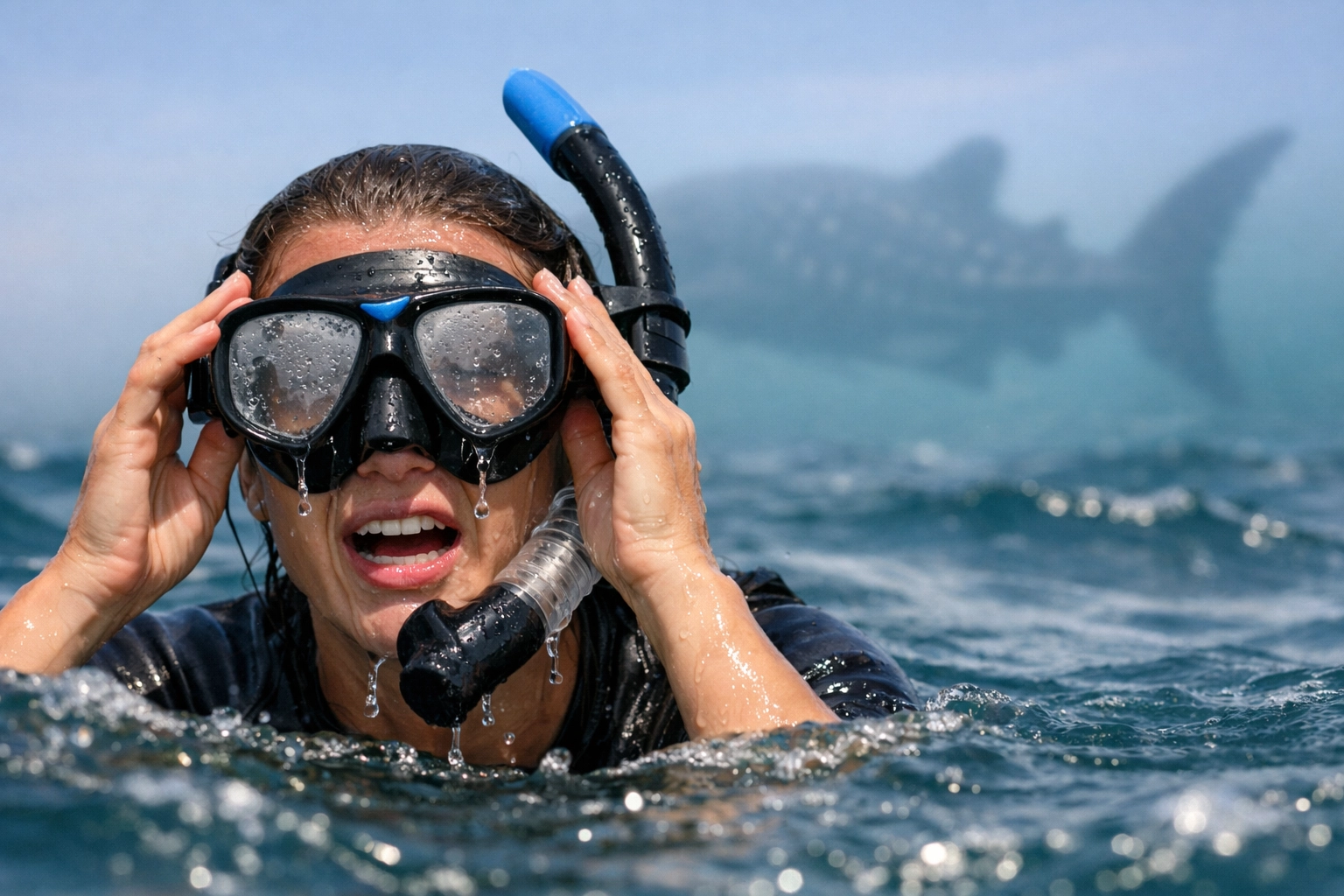 Graphic 1: An illustration of Karen struggling with leaky goggles and choppy water while a whale shark swims away, labeled "The Whale Shark Moment," "The Defective Gear," and "The Murky Water."
This is exactly what happens to many students in the classroom. When we see a student engage in task avoidance, "shut down," or act out during a lesson, we are often seeing the "Whale Shark Moment." The student may look like they are choosing not to participate, but in reality, their internal systems are being taxed beyond their limits. Just as my flooded goggles and the choppy water made it impossible for me to keep up with the shark, various neurodevelopmental challenges make it impossible for some children to keep up with the curriculum.
The Defective Gear
For a student with dyslexia or executive dysfunction, the "gear" they are given to navigate a lesson is often as broken as my leaky snorkel. Imagine being asked to read a long passage when the letters don't stay still, or being asked to organize a complex project when your brain’s "filing system" isn't functioning properly.
In these cases, the child isn't refusing to work; they are working with tools that aren't fit for the task. We often see this in our neurobehavioral evaluations, where we identify that a child’s working memory or processing speed simply cannot handle the load of the assignment. For a child with autism, dyslexia, or ADHD, a standard textbook or a complex multi-step verbal instruction is a defective piece of equipment.
The Murky Water
The environment plays a massive role in a child's ability to perform. For a child with processing speed delays or sensory issues, the classroom can feel as overwhelming and "murky" as a choppy ocean. The hum of the air conditioner, the visual clutter on the walls, and the chatter of peers all create "noise" that the brain must filter out. When the environment is too demanding, the brain's "bandwidth" is consumed by survival and regulation, leaving very little left for actual learning. They are swimming through murky water, unable to see the goal or find their rhythm.
The Gap
Finally, there is the "gap." If a student has gaps in their foundational skills due to inconsistent schooling, unidentified learning disabilities, or emotional trauma, they land "too far away" from the starting point of the lesson. In the ocean, if you jump in ten yards behind the whale shark, you can never catch up, no matter how hard you swim. In the classroom, if a child is expected to perform long division but hasn't mastered basic subtraction, the gap is insurmountable. No matter how much "grit" or "motivation" we demand from them, they simply cannot close that distance without a boat to pick them up and move them forward.
When a student stops swimming, it isn't because they don't want to see the "whale shark" of academic success. It is because the cost of trying: with broken tools and a widening gap: has become too high. The "giving up" we see is actually a survival mechanism for a brain that is overwhelmed. This is where neuropsychological evaluations become essential, as they help us pinpoint exactly where the gear is failing and where the gap began.
Moving from Frustration to Support
When we reframe "won't" as "can't," our approach changes from discipline to intervention. Instead of punishing the child for "stopping," we look at the conditions that forced them to stop. We shift our focus from changing the child’s attitude to changing the child’s environment and tools. This shift is vital for maintaining a child's self-esteem; when a child is told they "won't" do something they actually "can't" do, they begin to internalize the idea that they are "bad" or "stupid."
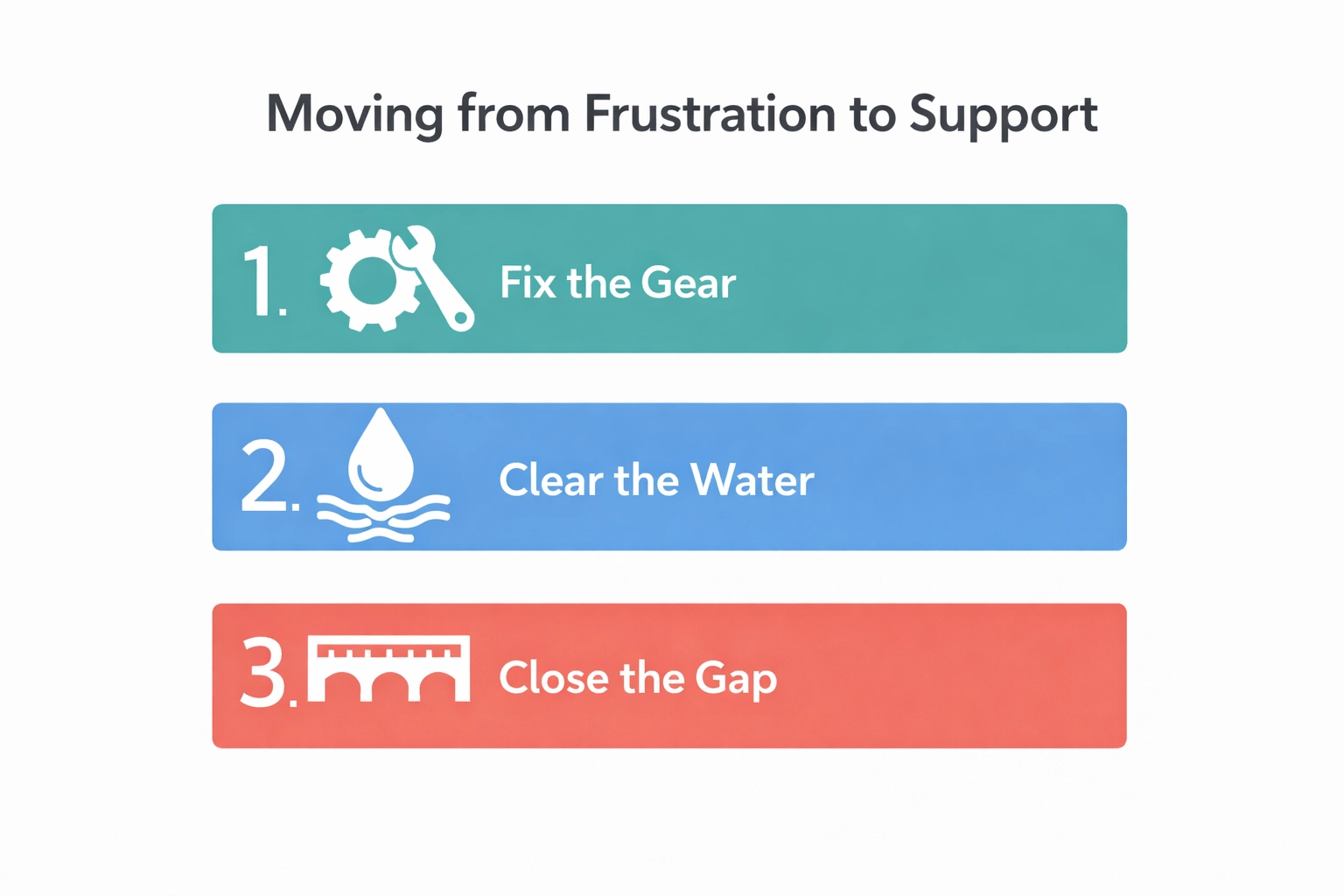 Graphic 2: An infographic representing "Moving from Frustration to Support" through three steps: 1. Fix the Gear, 2. Clear the Water, 3. Close the Gap.
To support these students, we must focus on three primary interventions:
- Fix the Gear: We must provide the right accommodations. This might mean using audiobooks for a student who struggles with decoding, speech-to-text software for a student with dysgraphia, or visual checklists for a student with executive function challenges. We aren't making the work "easier"; we are giving them a snorkel that actually works so they can breathe while they swim.
- Clear the Water: We need to simplify instructions and reduce environmental distractions. This could involve providing a quiet workspace, using noise-canceling headphones, or breaking down complex projects into single, manageable steps. Our IEP concierge services often focus on ensuring these environmental supports are legally documented and consistently implemented.
- Close the Gap: We must meet the students where they landed, rather than where we expected them to be. This requires targeted instruction that addresses the specific foundational skills they are missing. By providing the scaffolding necessary to help them move forward, we give them a realistic path to success.
By recognizing the "can't," we protect a child’s self-esteem and provide them with the specific tools they need to start swimming again. Success in the classroom, much like in the ocean, requires more than just motivation; it requires the right conditions to thrive. If you feel your child is struggling in their "Whale Shark Moment," reaching out for a professional assessment can be the first step in fixing the gear and clearing the water.
About PEC Group
 PEC Group (Educational & Psychological Services) is dedicated to providing comprehensive support for children, families, and educators. Led by Karen Veinbergs, our team specializes in neurobehavioral and neuropsychological evaluations, helping to uncover the "why" behind learning and behavioral challenges. We believe that every child has the potential to succeed when provided with the right tools, environment, and understanding. Whether you need help navigating the IEP process or seek a deeper understanding of your child's unique brain, we are here to provide clarity and a path forward.
For more information or to schedule a consultation, visit our contact page or explore our resources.