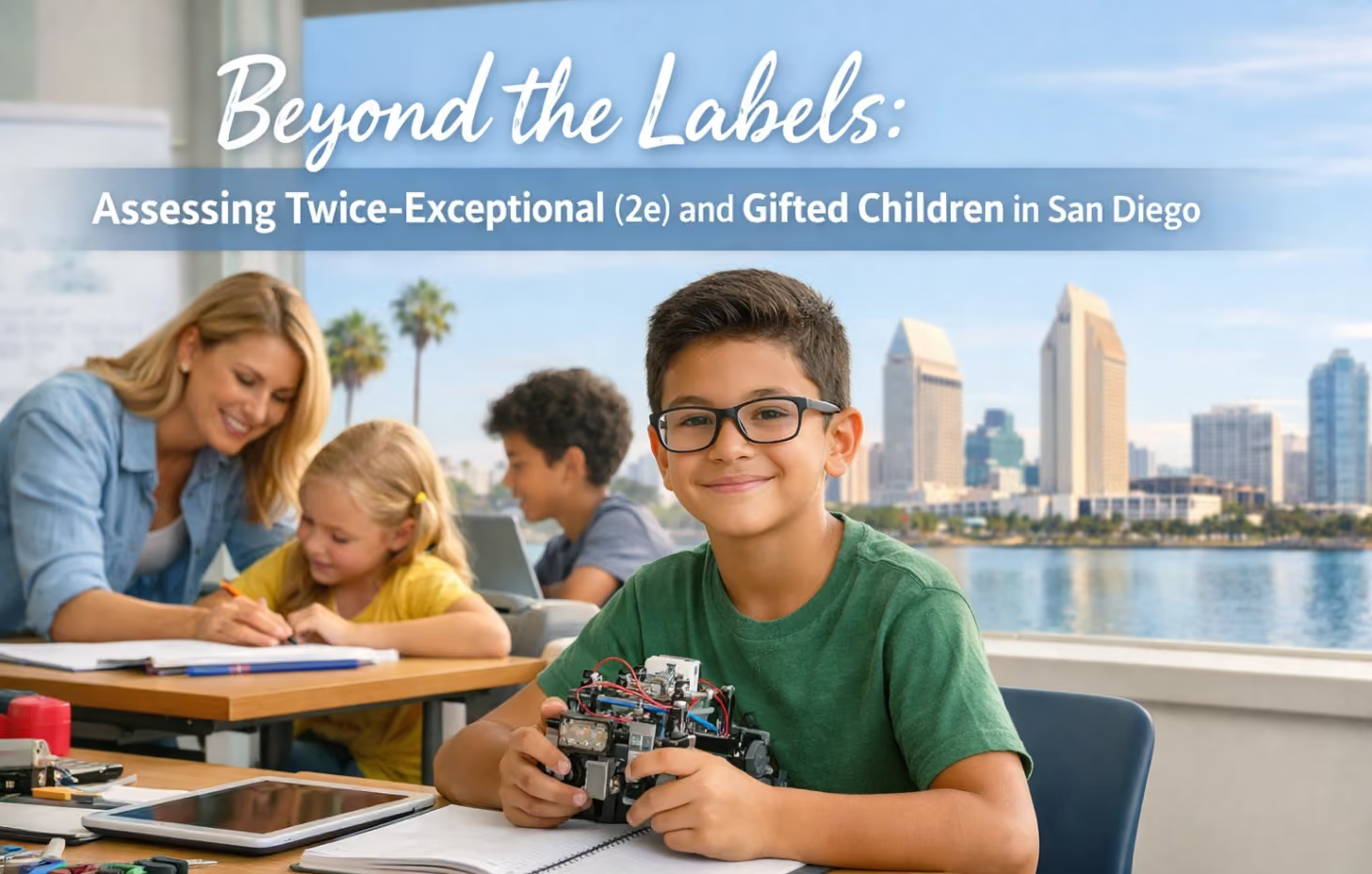
Beyond the Labels: Assessing Twice-Exceptional (2e) and Gifted Children in San Diego

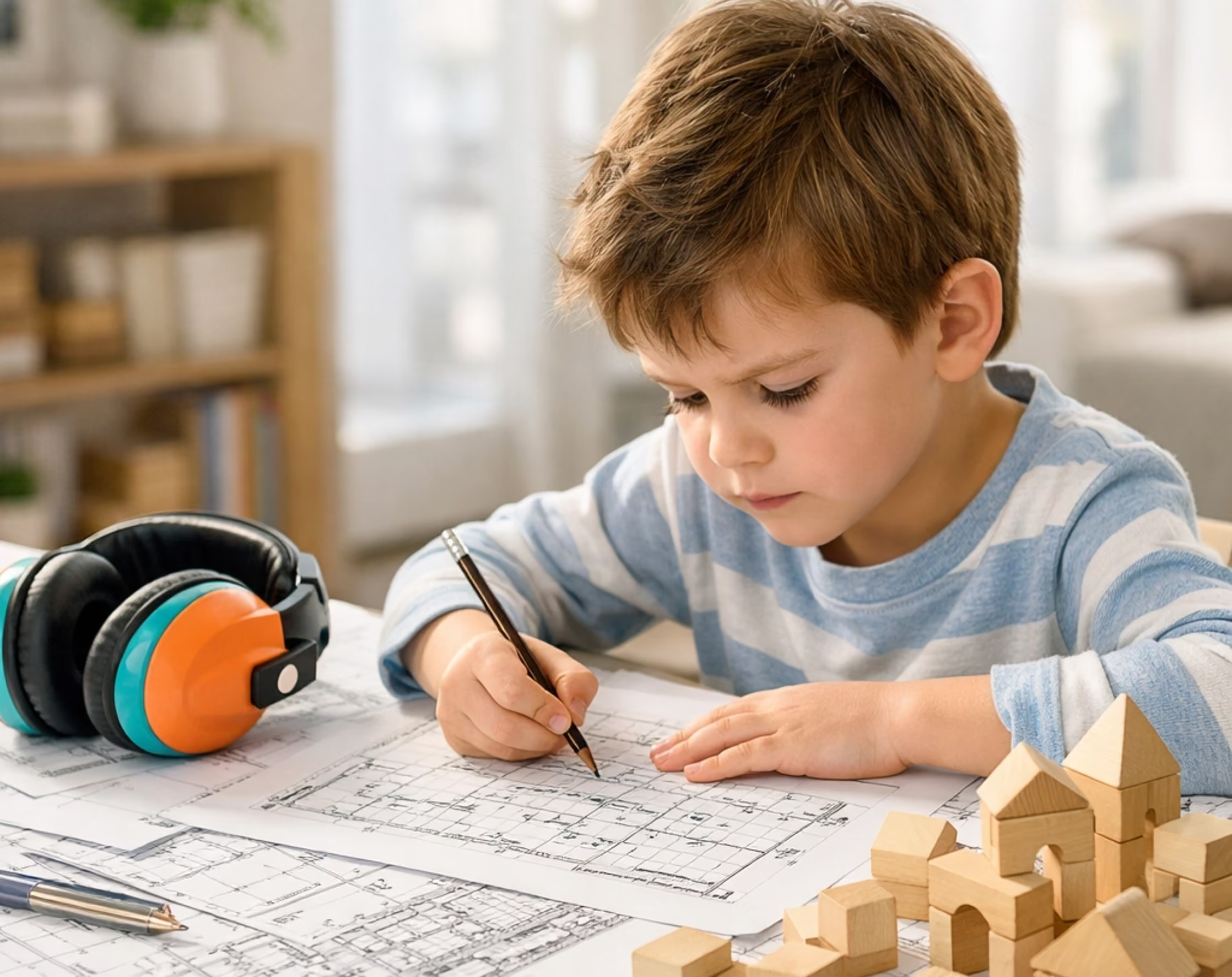
To truly understand a 2e profile, a standard psychoeducational assessment in San Diego needs to go deeper than just checking boxes for grade-level proficiency. We need to look at the architecture of the brain. This is where a comprehensive neuropsychological assessment in San Diego becomes the gold standard. Instead of just asking if a child can read, we ask how their brain processes phonemes, how their working memory holds onto information, and how their executive functions manage the transition from "idea" to "pencil on paper." For a gifted child, these processes are often asynchronous. Asynchrony is a fancy word for "developing at different speeds." A seven-year-old might have the mathematical reasoning of a high schooler but the emotional regulation of a preschooler. If you only assess the math or only assess the behavior, you miss the human being sitting in front of you.
The Davidson Institute, a leading voice in the support of profoundly gifted and 2e students, emphasizes that these children require a specialized approach to assessment. They aren't just "smart kids who struggle"; they are neurodivergent individuals whose brains are wired differently. This is why PEC Group takes a neuro-affirming stance. We don't view ADHD, autism, or dyslexia as "broken" parts that need fixing. We view them as part of a complex cognitive profile that includes both superpowers and significant hurdles. Our goal is to provide a roadmap that honors both. If you want to dive deeper into our philosophy, you can check out a new approach to see how we rethink these evaluations.
When parents come to us for a child neuropsychological assessment, they are usually looking for more than just a diagnosis. They are looking for a way to stop the nightly homework battles and the soul-crushing feeling that their child is being misunderstood by the world. We focus on the "why." Why does this brilliant child refuse to write a simple paragraph? (Hint: It’s often not defiance; it’s a processing speed gap or fine motor fatigue). Why can they build a functioning robot but can't remember to bring their lunchbox home? (Executive functioning, we’re looking at you). By identifying these specific gaps, we can move away from labels like "unmotivated" and toward strategies that actually work.

One of the biggest hurdles for 2e families in San Diego is navigating the school system. Many schools are set up to support "gifted" OR "special education," but rarely both simultaneously. This is a systemic gap that can be incredibly isolating for families. You might find yourself in a position where the school says your child doesn't qualify for an IEP because their grades are "fine," even though you know they are working four times harder than their peers just to stay afloat. This is where an independent educational evaluation can be a game-changer. It provides an objective, deep-dive look at the child’s needs that schools might miss during their own internal evaluations.
Research has shown that when 2e children are correctly identified and supported, their outcomes improve drastically. Megan Foley-Nicpon’s research suggests that focusing on a child's strengths: rather than just remediating their weaknesses: is the key to fostering resilience and self-esteem. If a child is only told what they are bad at, they lose sight of what they are amazing at. At PEC Group, our assessments are designed to highlight those strengths so that parents and teachers can build a "strengths-based" plan. This might mean allowing a child to use speech-to-text software for an essay so their brilliant ideas aren't bottlenecked by their dysgraphia, or providing advanced math placement even if they still struggle with social skills.

Choosing the right professional for a psychoeducational assessment in San Diego is critical. You need someone who understands the nuances of the 2e profile and won't just tell you that your child is "bright but scattered." You need a team that understands the intersection of high IQ and neurodiversity. We pride ourselves on being that team. We offer a range of services, from neurobehavioral evaluations to specialized autism, dyslexia, and ADHD assessment screenings. We aren't just looking for a diagnosis to put in a file; we are looking to empower you with the information you need to advocate for your child.
If you are feeling overwhelmed by the process, you are not alone. Navigating the world of giftedness and 2e can feel like trying to find your way through a thick fog. But once you have the right assessment, the fog starts to lift. You begin to see your child for who they truly are: a complex, brilliant, and unique individual who just needs a slightly different roadmap to navigate the world. For more tips on how to handle the school side of things, our guide on navigating your child's education is a great place to start.
The journey of parenting a twice-exceptional child is rarely a straight line. It’s full of zig-zags, loops, and the occasional steep climb. But with the right data and a neuro-affirming perspective, it’s a journey that can lead to incredible places. Your child’s "labels" shouldn't be a ceiling; they should be the foundation upon which we build a support system that allows them to soar. If you're ready to move beyond the labels and discover the "why" behind your child’s challenges, we are here to help. You can explore our FAQ for more information or join our newsletter to stay connected with our community of San Diego families.
Remember, being gifted doesn't mean life is easy, and having a learning challenge doesn't mean your child isn't capable of greatness. They are simply twice-exceptional, and that is a pretty amazing thing to be. Let's make sure the world sees that, too. If you’re feeling like it’s time for change, we’re ready when you are.

At the end of the day, a neuropsychological assessment in San Diego is more than just a report. It is a bridge between who your child is and who they have the potential to become. By understanding the masking effect, honoring asynchrony, and following the lead of researchers like those at the Davidson Institute, we can ensure that no "twice-exceptional" child in our community is left behind or misunderstood. We are committed to transforming communities one family at a time by providing the clarity and support you deserve. Let's stop guessing and start supporting the incredible brain your child was born with.